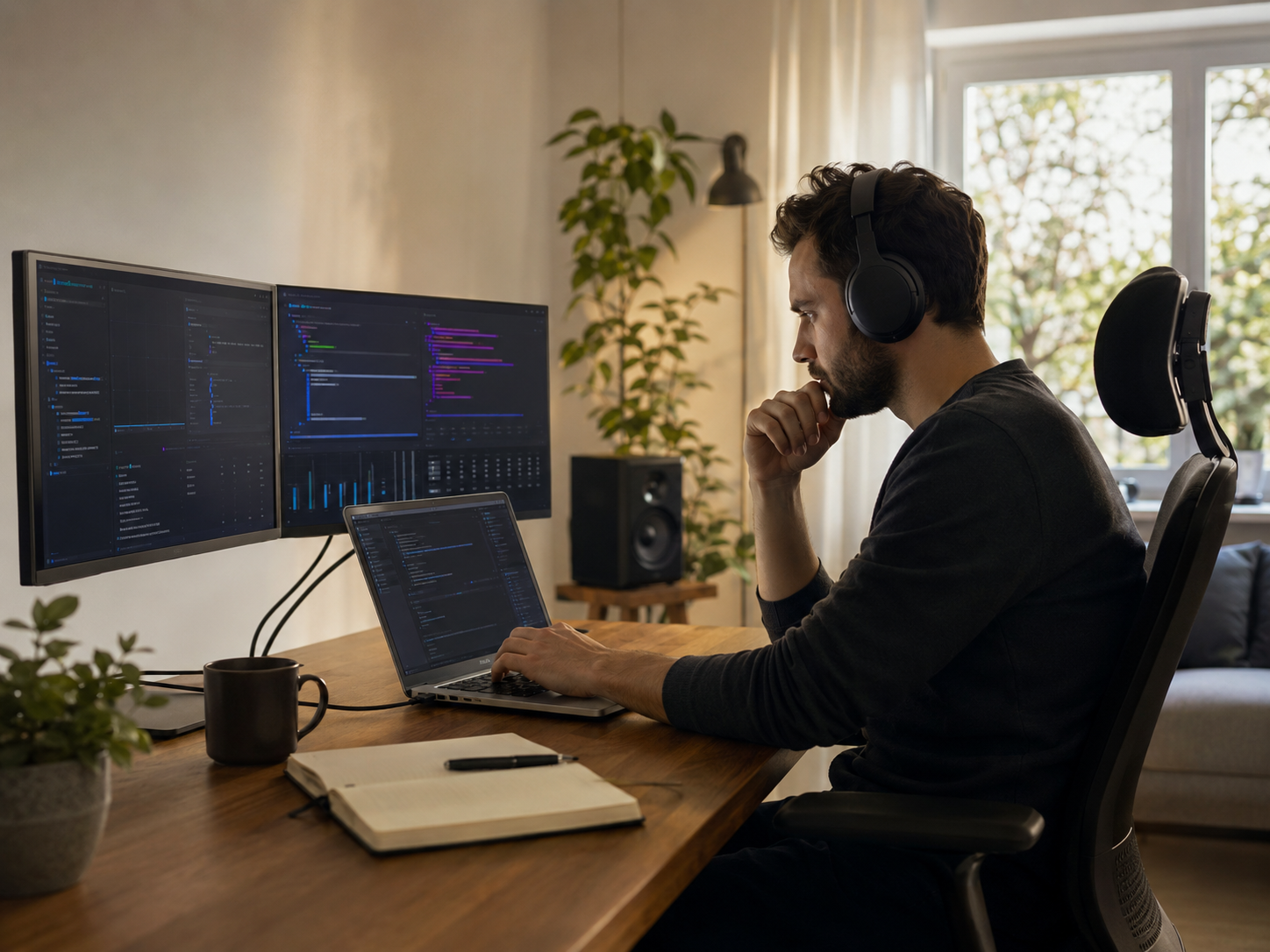
Music for Coding: Chill House That Holds Focus
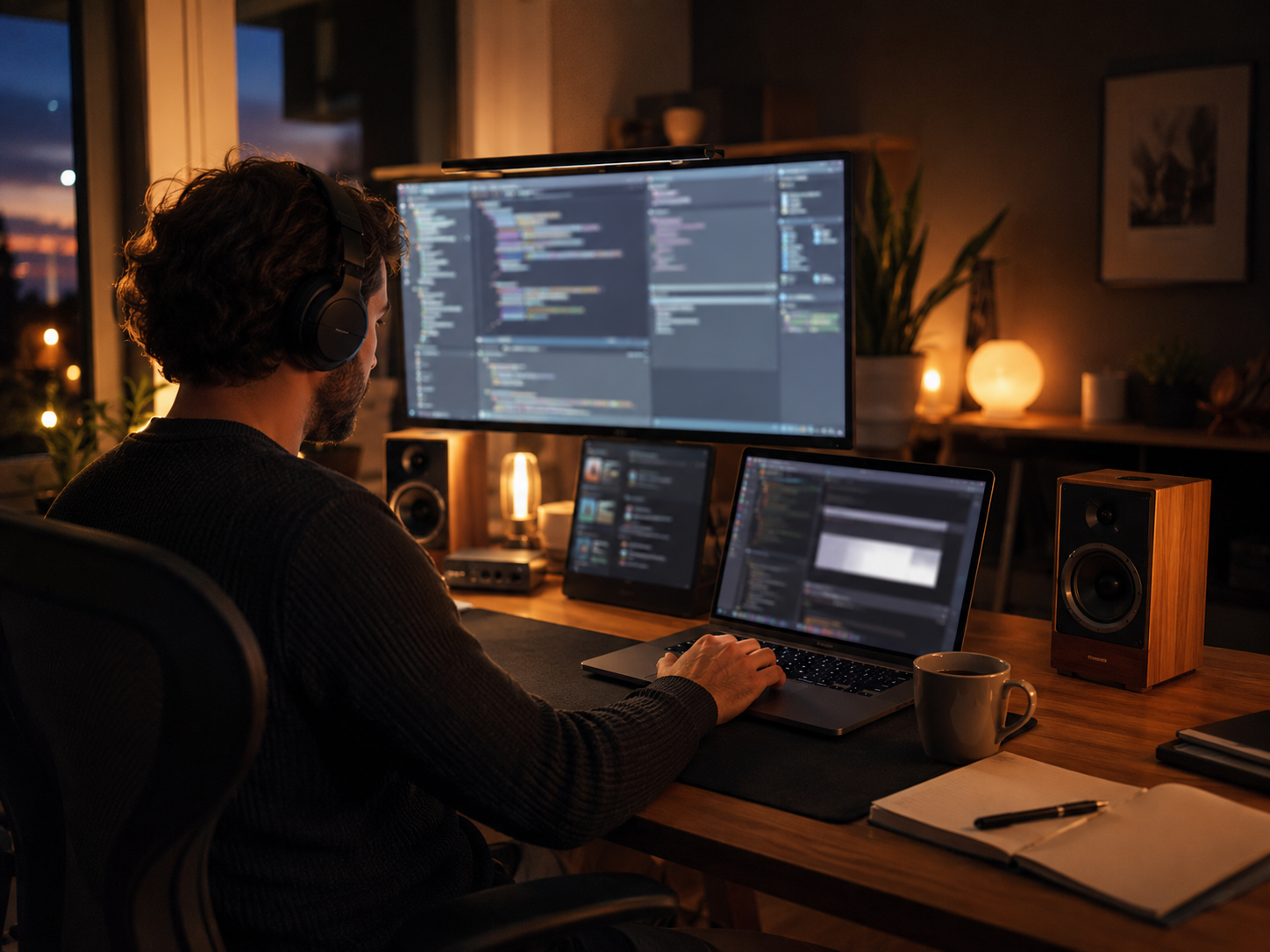
Music for coding has a specific job: it should help you stay with the problem without becoming another problem to manage. When you are tracing a bug, naming a function, reviewing a pull request, or holding several layers of logic in your head, the wrong track can break the thread. Chill house works well for many developers because it gives the room a steady pulse without demanding the front seat. The groove is present, the mood is warm, and the details are usually soft enough to sit behind the work instead of competing with it.
Why music for coding needs to stay even
Programming already has enough context switching built in. You move between editor, terminal, browser, documentation, logs, tickets, tests, and sometimes a chat thread that should have been an issue. Good programming music should not add more switches.
The most useful coding soundtrack tends to be even in three ways.
First, the rhythm should be stable. A clean four-on-the-floor pattern can give your session a sense of forward motion without pushing you into a rush. You do not need dramatic drops or sudden breakdowns while comparing two pieces of state or working through a failing test. A steady beat helps mark time gently.
Second, the energy should be consistent. Coding often needs long arcs of attention. If a playlist keeps jumping from sleepy to intense, your mind has to keep adjusting. Chill house for coding usually works best when it sits in a moderate lane: awake enough to keep you moving, calm enough to avoid pressure.
Third, the arrangement should leave space. Dense lead melodies, aggressive vocal hooks, and sharp transitions can pull attention away from language and logic. Developers spend a lot of time reading symbols and words with precision. Lyrics, especially clear lyrical phrases, can collide with that work. Instrumental or lyric-light chill house is useful because it creates atmosphere without filling every mental gap.
If you use music during broader work blocks too, the same principle applies. The guide to chill house for work goes deeper into keeping a calm focus environment beyond the coding editor.
The best chill house for coding
Not every chill house track is ideal for programming. Some tracks are made for a lounge, a sunset set, or a social room where attention can drift. Coding asks for a narrower shape.
Look for tracks with soft percussion, rounded bass, restrained melodic lines, and transitions that do not announce themselves too loudly. A track can still have character. It just should not keep asking you to notice it. The sweet spot is music that feels alive when you listen closely, but stays polite when your attention returns to the code.
Vocals are the main thing to watch. A short vocal texture, a blurred phrase, or a distant sample can be fine. A full verse, a memorable chorus, or a repeated sentence can become sticky in the worst way. When you are trying to reason about a recursive function or understand a messy API response, even one phrase looping in your head can become noise.
Bass also matters. A warm low end can make a session feel grounded, but too much sub pressure becomes tiring, especially on headphones. For coding, the bass should support the groove rather than dominate the room. You want a line that keeps you moving through small tasks: refactor this component, run the test, check the output, clean the naming, commit the change.
The same goes for high frequencies. Bright hats and crisp percussion can add clarity, but sharp top-end can wear you down over a long session. Good focus music for programming should feel smooth enough that you can forget it is there for stretches of time.
A helpful test is simple: if you find yourself reaching for skip more than once or twice, the set is probably too eventful for the task. Coding music should reduce decisions, not create a second queue of preferences.
Match the soundtrack to the programming task
Developers do different kinds of thinking in a single day, and the best music choice can shift with the task. You do not need a complicated system. A few practical categories are enough.
For setup work, light admin, or small fixes, a slightly groovier chill house set can be helpful. These tasks often need momentum more than deep abstraction. Updating dependencies, renaming files, formatting code, wiring a simple endpoint, or cleaning a branch can benefit from a beat that keeps the hands moving.
For building new features, stay with softer programming music. You are making decisions and holding structure in your head. This is where lyric-free or near-lyric-free tracks help most. The goal is to stay relaxed while still alert, especially during the first pass when the code is not clean yet and your brain is still shaping the idea.
For debugging, reduce novelty. Debugging needs patience. You may be reading the same function several times, checking assumptions, adding logs, or proving that something is not the source of the problem. Music with dramatic changes can make the process feel more tense than it is. A steady chill house stream can help you keep going without turning the bug into a personal battle.
For code review, keep the volume low and the texture light. Review is language-heavy. You are reading intent, naming, edge cases, and comments. If the music is too present, it can interfere with careful reading. In this mode, the music should feel like a quiet room with a pulse.
For learning new material, use the gentlest version of the sound. Documentation, tutorials, and unfamiliar concepts need more verbal attention. This overlaps with studying, so the ideas in chill house for studying fit well when you are reading docs or learning a framework.
How to set up music for coding without fuss
The best setup is the one you do not have to keep adjusting. A coding session already has enough tools open, so make the music simple.
Start with volume. Keep it low enough that it feels like part of the room, not a performance. If you notice the kick more than the code, pull it down. If you are wearing headphones, lower is usually better for long blocks. You should be able to think in complete sentences without feeling like you are talking over the track inside your head.
Next, avoid constant playlist management. Searching for the perfect track is a subtle form of procrastination. A live radio stream is useful because it removes the decision loop. You press play, then return to the editor. If a particular track is not your favorite but still fits the mood, let it pass. That small discipline protects the session.
Keep notifications separate from music. If your music is playing through the same device that keeps pinging you, silence the pings where possible. A calm groove cannot do much if it is interrupted by alerts every few minutes.
Use the same sound for a repeated ritual. For example, start the stream when you open your editor, run your local environment, and check the task you are working on. Over time, that consistent cue can help mark the beginning of focused work. It does not need to be dramatic. It just tells your brain: this is the coding lane.
A visual environment can help too, especially if you like having a screen nearby that is not a feed or dashboard. The Chillhouse Live listener map is designed more like a calm presence than another task. For some developers, that is a better companion than a busy social tab.
When silence is better than programming music
Music for developers is useful, but it is not always the right tool. There are moments when silence wins.
If you are reading a dense design document, negotiating tricky requirements, writing careful user-facing copy, or pairing with someone, music can get in the way. The same is true when you are tired and every sound starts to feel like friction. In those cases, turn it off for a while. A good focus habit should be flexible, not rigid.
Silence is also useful at the start of a hard problem. Sometimes you need a few quiet minutes to understand what is actually being asked. Once the shape of the problem is clear, music can come back in and help you stay with the implementation.
It helps to notice the difference between support and escape. If you are using music to settle into the work, good. If you are using it to avoid starting, the track choice is not the real issue. Open the file, write the failing test, outline the function, or leave one plain comment that says what the next step should be. Then let the music carry the repetition after the first move is made.
The goal is not to prove that music always improves coding. The goal is to choose sound intentionally. Chill house is valuable because it can be present without being pushy. When it stops doing that, the useful move is to change the volume, change the context, or take a quiet break.
A simple coding session flow
Here is a practical way to use chill house for coding without overthinking it.
Before you start, choose one task that would make the session worthwhile. Not a whole project. One real movement: finish the login edge case, clean up the data mapper, write tests for the parser, or review the open pull request.
Start the music before opening extra tabs. Keep the volume low. Give yourself a few minutes to settle into the groove while you open the project and run whatever local commands you need.
Work in a single lane for a reasonable block of time. If you are debugging, debug. If you are refactoring, refactor. If you are reviewing, review. The music can help create continuity, but it cannot protect the session if the task keeps changing every few minutes.
When you hit friction, do not immediately switch tracks. Pause and name the problem. Is the test unclear? Is the function doing too much? Is the API response different from what you assumed? Developers often reach for a distraction at the exact moment the useful thought is about to happen. Let the groove stay steady while you write down the next small question.
At the end, stop with a clean handoff. Leave a note, commit the work, update the issue, or write the next command you need to run. This matters more than squeezing in one more tiny change. A good ending makes the next session easier.
If you enjoy the background and want to understand the sound more deeply, From House to Chill House gives useful context for why the genre can feel rhythmic without becoming too forceful.
Keep the code moving gently
The right music for coding does not make the work effortless. It makes the room a little easier to stay in. Chill house is a strong fit because it offers rhythm, warmth, and continuity while leaving your attention available for the code itself.
If you want a steady companion for your next session, start the Chillhouse Live radio stream. For a visual place to listen and stay connected with the channel, visit the Chillhouse Live YouTube channel.