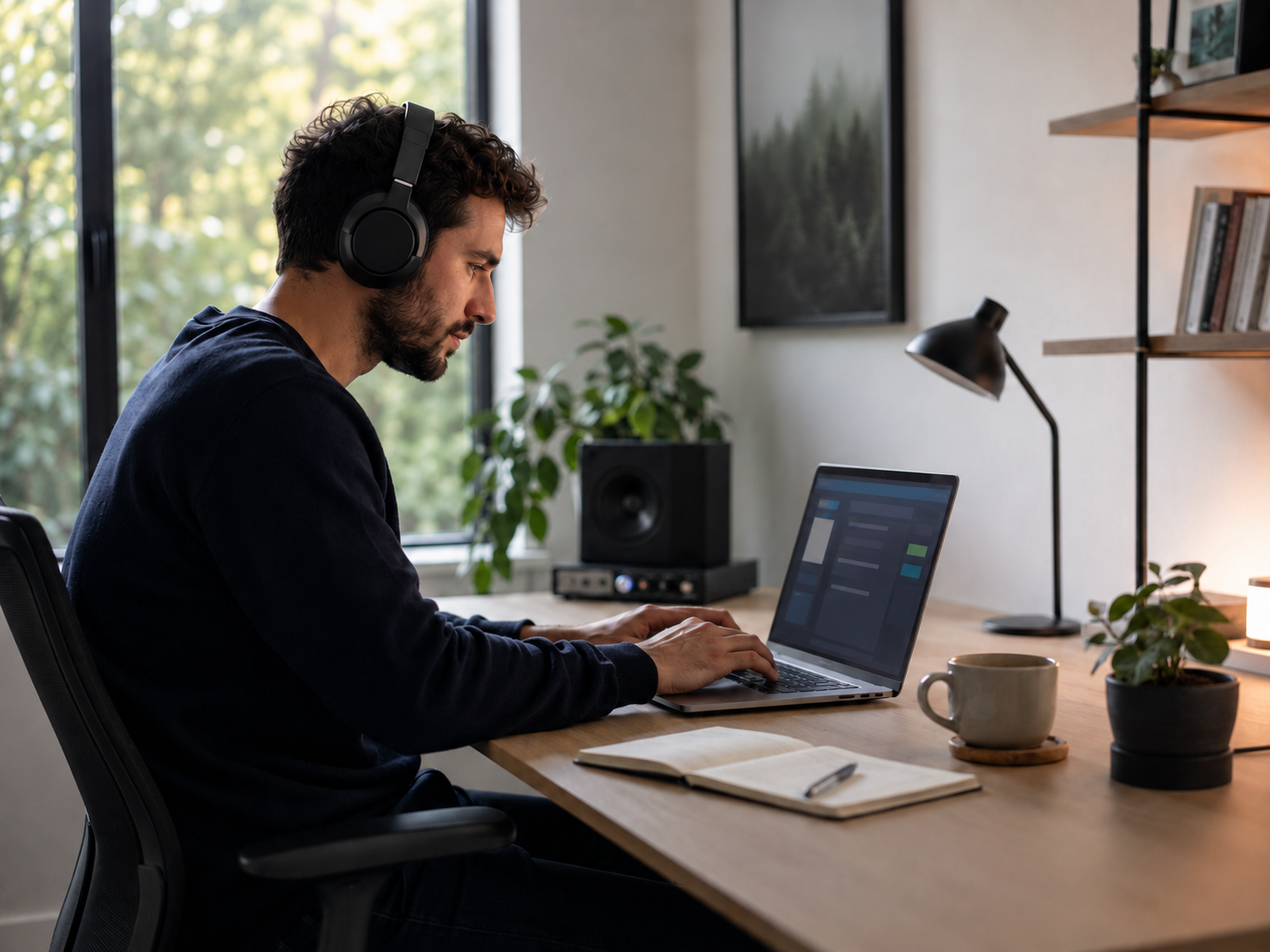
Chill House for Work: Music for Deep Focus
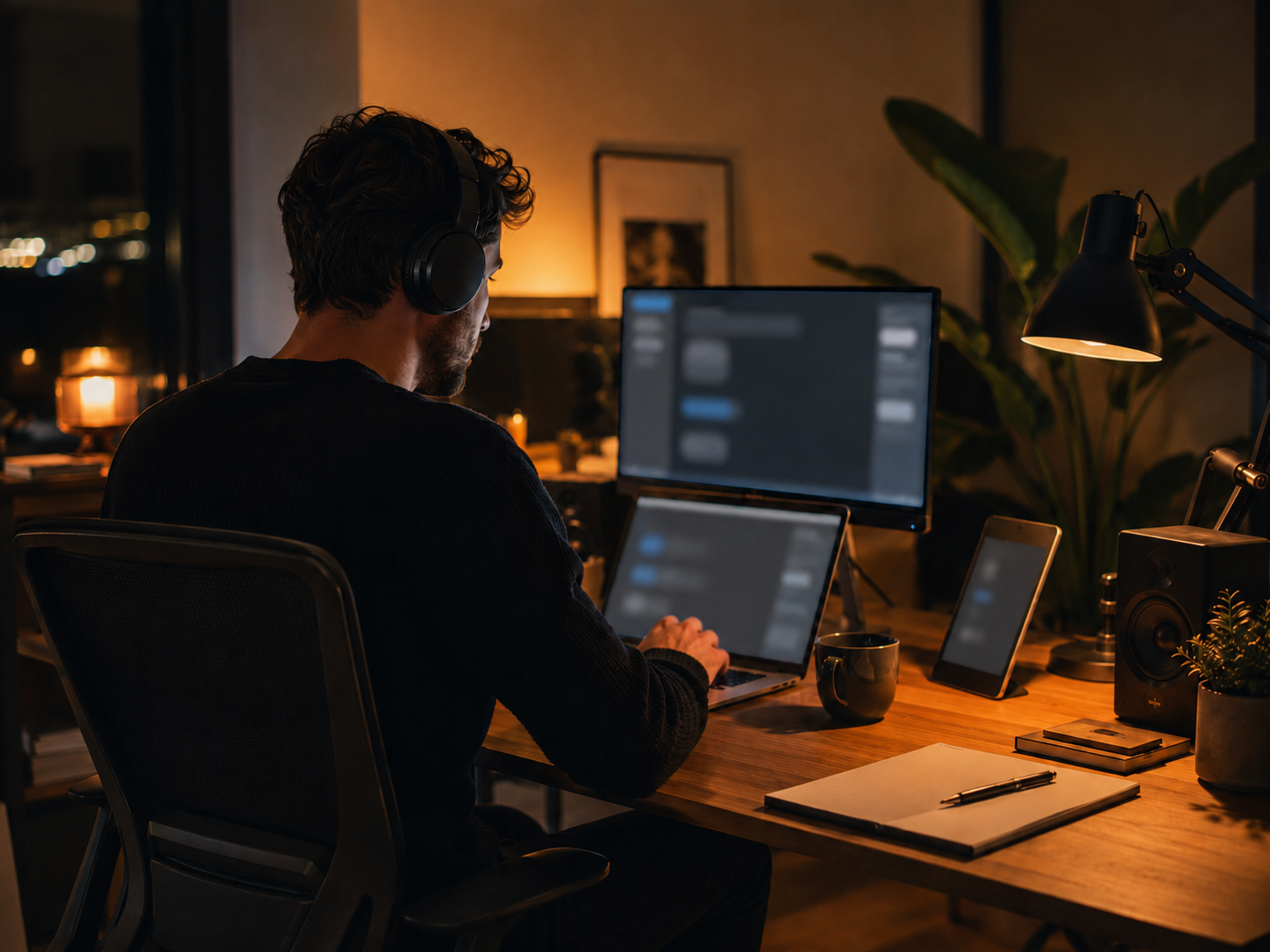
Chill house for work is useful because it gives your mind a steady surface to sit on. It is rhythmic enough to keep momentum, but soft enough to stay out of the way. For knowledge work, that balance matters. You need something that can hold the room together without pulling your attention into every change, vocal line, or drop. The right track can make a long writing session, coding block, research sweep, or admin cleanup feel less fragmented and more continuous.
The goal is not to make work exciting. It is to reduce friction. Good focus music for working does that by staying predictable, gently moving, and emotionally neutral enough to avoid disrupting thought. That is why chill house often works better than playlists that promise productivity music but rely on busy hooks or dramatic shifts. Used well, it becomes a background that helps you enter and stay in flow.
Why Chill House for Work Holds Attention Without Stealing It
A good work soundtrack has a narrow job. It should fill silence, keep the atmosphere stable, and avoid forcing decisions on you every few seconds. Chill house for work is effective because its structure usually stays consistent. The beat gives a sense of pace, but the arrangement tends to leave enough open space for reading, writing, planning, or problem solving.
That consistency is especially helpful during long tasks that do not reward constant interruption. If you are drafting a proposal, cleaning up a spreadsheet, or moving through a backlog of smaller tasks, your attention benefits from a sound that does not demand re-evaluation. You can leave the music on and let it do its work in the background music for working category, which is exactly where it tends to perform best.
It also helps that chill house usually avoids extreme contrast. There is less of the sharp rise and sudden drop that can pull your body into anticipation. That matters when the work itself already asks enough of you. A track with a clean groove and restrained texture can support sustained concentration better than something that tries too hard to create a mood.
For people who like a little more context around the genre, From House to Chill House: How the Genre Mellowed Out explains why this softer direction developed in the first place.
What to Listen For in Deep Work Music
Not all deep work music works the same way. Some tracks feel calm at first but slowly become distracting because they add too much variation, too much vocal presence, or too much melodic movement. When you want music for a work session, look for a few practical qualities.
First, keep an ear on the drum pattern. A stable four on the floor rhythm is often enough. It gives the session a pulse without creating tension. If the percussion gets too busy, the music can start competing with your internal pacing. That is usually fine for exercise or movement, but less useful when you need sustained mental clarity.
Second, watch the low end. Bass should feel grounded, not heavy. If the bass line becomes too prominent, it can start to occupy the same mental space you need for reading and reasoning. In a good focus music for working set, the low end supports the groove and then steps back.
Third, be careful with vocals. Even a short vocal phrase can pull your attention away from the task. If you are trying to write, edit, or think through a technical problem, your brain may keep checking for meaning in the voice. Instrumental tracks are usually safer for productivity music because they remove that extra layer of interpretation.
Fourth, prefer repetition over surprise. Small changes are fine. In fact, they help the session feel alive. But the arrangement should not keep asking for attention. For deep work, the best tracks often feel like they are moving forward without announcing it. That is the sweet spot.
If you are using music as part of study or reading rather than a broader work block, the pacing matters even more. Chill House for Studying: Focus Music That Stays Soft is a useful companion piece if you want to compare what makes a study set feel different from a work set.
How to Build a Session Around Chill House for Work
Music helps most when it is part of a simple system. A work soundtrack alone will not fix a scattered day, but it can support a routine that reduces decision fatigue. The easiest way to use chill house for work is to assign it a role before the session starts.
Start by choosing the type of task. Use it for tasks that benefit from continuity: drafting, coding, design cleanup, inbox processing, research, outlining, and administrative catch-up. It is less useful when the work depends on active listening, rapid collaboration, or high levels of interruption. If you are switching constantly between meetings and messages, the music will not have room to do its job.
Next, set the volume lower than you think you need. If you can clearly focus on the song, it may be too loud. The music should feel present but not central. When it fades into the edges of awareness, it is usually doing the right thing.
Then, give the session a length. A clear block of time works better than an open-ended background habit. For example, use one set or one continuous stretch of music for a defined task block, then stop and reset. That structure helps the music mark a beginning and an end, which can make it easier to enter work mode again later.
It also helps to keep the environment simple. Fewer visual distractions, one main task, and one playlist or stream are often enough. Deep work music is most effective when your setup does not create extra choices every few minutes. The point is to lower friction, not add another layer of curation.
If you like ambient visual context while you work, the A Living Screensaver: The Chillhouse Live Listener Map, Full-Screen piece fits well with this way of working. Some people find that a calm visual companion reinforces the same steady rhythm as the sound.
Matching Music to the Kind of Work You Are Doing
A single playlist can carry many sessions, but different kinds of work ask for slightly different emphasis. The useful question is not "What sounds good?" It is "What helps this task stay clear?"
For writing, choose tracks with a gentle pulse and very little melodic clutter. Writing already requires constant sentence-level decisions. If the music is too expressive, it can create an extra layer of narrative in your head. A restrained set of productivity music helps the words stay in the foreground.
For coding or analytical work, stability matters even more. You want sound that supports concentration without making you count measures or anticipate transitions. Minimal variation can be a plus here because it lets you stay inside the problem. Many people prefer a longer, seamless mix for this kind of work.
For administrative work, a little more bounce is acceptable. Repetitive tasks can benefit from a slightly stronger groove because the music provides momentum while the work itself remains simple. This is where chill house can be especially useful as background music for working, since it keeps the energy from sagging without becoming loud or flashy.
For research or reading, reduce everything that competes with language processing. That usually means no vocals, no large lead synths, and no sudden shifts in energy. You are not trying to be entertained while reading. You are trying to keep the mind gently occupied so it does not reach for the phone or drift into unrelated thoughts.
For a broader look at where this style fits beyond the desk, The Best Places to Play Chill House: Bars, Cafés, Lounges & Deep Focus is a good reference. It shows why the same sound can work in social spaces and concentrated settings for different reasons.
Common Mistakes That Break Focus
The most common mistake is choosing music that is too interesting. A track can be beautiful and still be wrong for work. If the arrangement keeps shifting, if the melody keeps asking for attention, or if the production becomes too dramatic, it stops being a tool and starts becoming a distraction.
Another mistake is using music as a way to avoid task setup. It is easy to feel productive because the room sounds right. But a soundtrack does not replace a clear next step. If you want chill house for work to help, pair it with a concrete starting point. Open the document. Define the task. Make the first small move. Then let the music hold the space.
It is also a mistake to treat every work session the same. Some tasks need silence. Some need a little sound. Some benefit from a long mix, while others work better with short resets. Good use of focus music for working means matching the tool to the task, not forcing the same pattern onto every kind of labor.
Finally, do not chase novelty all day. Constantly searching for the perfect playlist can become its own form of procrastination. Once you find a stream or set that stays soft and steady, keep returning to it. Familiarity can be a feature. The less your ears have to negotiate, the more your mind can stay on the work.
If your workday also ends with a wind-down session, it can help to separate the soundtracks clearly. Chill House for Sleep: Music for Winding Down is a useful counterpoint because it reminds you that rest music and focus music do not need to do the same job.
Keep It Going
If you want a steady stream for deep work, listen on the radio stream and keep the energy consistent through the day. For more sessions and live sets, visit the YouTube channel.