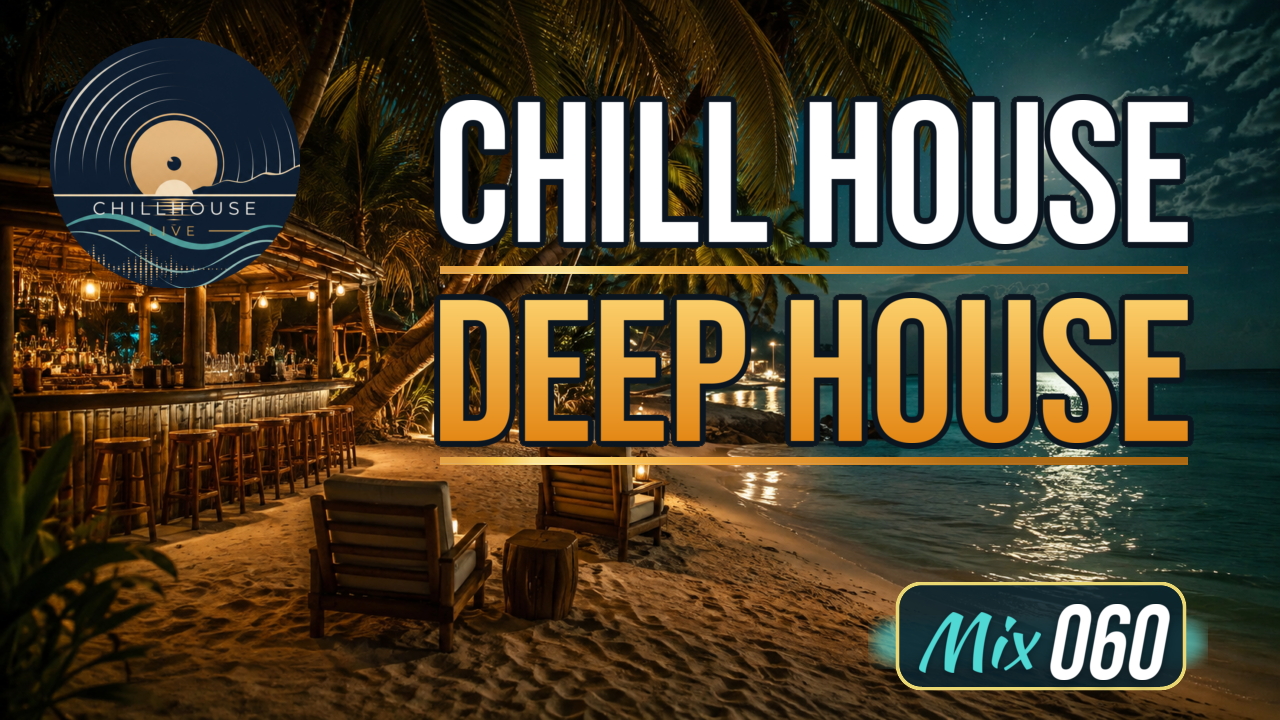
Warm, golden-hour deep house designed as ambience for bars, lounges and rooftops.
It fills the room without taking it over: your guests keep talking, the night keeps its glow. Hour-long mixes hold a consistent mood, and the 24/7 stream plays all evening without a playlist to babysit.
One to two new mixes a week on YouTube. The 24/7 radio stream is always on - also in TuneIn and other radio apps.
The music is not the attraction
In a bar, the music has one job and it is not to be enjoyed. It is to make the room feel like somewhere rather than nowhere. A room with no music is a room where everyone can hear the table next to them, and people lower their voices and leave earlier. Music raises the floor of the room so that a conversation feels private, and a half-empty bar feels alive rather than sad.
Which means the measure of good venue music is not whether guests like it. It is whether they never mention it. The moment a table starts discussing the track, the music has become an event, and it is now competing with the reason they came.
The evening has an arc
A bar at 18:00 and the same bar at 23:00 are two different rooms. Early on it is half full, the light is still up, and people are arriving and settling. Later it is loud, dense and warm, and the room carries its own energy. Music that is right for one is wrong for the other, and this is where most venue playlists fall down: they hold one mood all night.
The practical version of this is simple. Early evening wants warmth and space, something that fills the quiet without pushing. Later wants a little more pulse underneath the noise, because the room is now loud enough to swallow anything too gentle. Our mixes are built as hours with an internal arc for exactly this reason, and the 24/7 stream moves through the day on its own.
Two things that decide whether it works
Volume is the first and it is almost always wrong. The test is whether two people across a table can talk without leaning in. If they lean in, the music is too loud, and they will leave sooner. Set the level at the quiet part of the evening, because that is when a slightly-too-loud setting becomes obvious, and resist the urge to push it up as the room fills. A full room raises its own volume.
The second is who is in charge of it. Music that needs someone behind the bar to start it, skip it and queue it will drift to whatever that person likes by 22:00, which is a different bar than the one you designed. This is the real argument for a stream over a playlist: it starts, it runs, and nobody has to think about it during service.
If you run a venue
Worth being clear about the boundary here, because it matters and it is often blurred. Public performance rights for a commercial space are a separate question from where the music comes from, and the answer depends on your country and your setup. A page like this one is not the place to give you a confident yes.
If you are thinking about our music for your room, get in touch via the contact page and we will talk about what is actually possible for your situation. We would rather have that conversation properly than hand you a sentence that turns out to be wrong in your jurisdiction.
Common questions
What kind of music works best in a bar or lounge?
Something that fills the room without asking to be noticed. Instrumental or near-instrumental, dynamically even, and warm rather than bright. Chill and deep house suits this because it holds a consistent mood for hours and has no peaks that pull attention away from the table.
How loud should background music be in a venue?
Quiet enough that two people across a table can talk without leaning in. If guests raise their voices, the level is too high and they will leave earlier. Set it during the quiet part of the evening rather than the busy part, because a full room raises its own volume anyway.
Should the music change over the course of an evening?
Yes. A half-empty bar at 18:00 and a full one at 23:00 need different things: warmth and space early, a bit more pulse later once the room is loud enough to swallow anything too gentle. A single mood held all night is the most common problem with venue playlists.
Is a playlist or a stream better for a bar?
A stream, in most cases. A playlist needs someone to start it, notice when it ends and resist skipping, and during service that person is busy. By late evening it has usually drifted to whatever the staff prefer. A stream removes the decision from the floor entirely.
Can I play this music in my bar or restaurant?
Public performance rights depend on your country and your setup, and they are a separate question from where the music comes from. Rather than give you a generic answer that may be wrong where you are, we would ask you to get in touch via the contact page so we can talk about your specific situation.