Dinner Party Music That Lets Conversation Lead

You spend real effort on a dinner party: the menu, the table, who sits next to whom. Then twenty minutes before guests arrive, you open a music app, panic slightly, and either grab whatever playlist is on the home screen or default to silence because nothing feels right. The truth is that dinner party music is a smaller decision than the food, but it is not a trivial one. Get it wrong and it either disappears into forgettable noise or, worse, it fights your guests for attention. Get it right and nobody mentions it at all, which is exactly the point.
Why Most Dinner Party Music Fails at the Table
Most playlists built for parties are built for parties that are not dinner parties. They ramp up. They throw in a track with a big drop or a shouted hook right as your guests are mid-conversation about their kid's school or a work problem, and suddenly three people at the table stop talking and glance at the speaker. That is the failure mode: music that asks for attention it was never supposed to get.
The other common failure is the opposite problem: a jazz standards playlist or a generic "dinner music" collection that is technically inoffensive but so thin and repetitive that by the second course everyone has half tuned it out anyway, and the room feels a little flat. Silence is honestly better than either of these, but you can do better than silence.
What Chill House Gets Right for Dinner Party Music
Chill house sits in a useful middle ground. The tempo usually lands somewhere around 100 to 120 beats per minute, close to a relaxed walking pace, which keeps a track moving without ever feeling urgent. The four on the floor pulse is there, but it is understated: soft kick drums, warm basslines, unhurried chords, occasional vocal textures that never become a lead singer demanding the room's focus. It has enough structure to feel intentional and not enough drama to interrupt anyone.
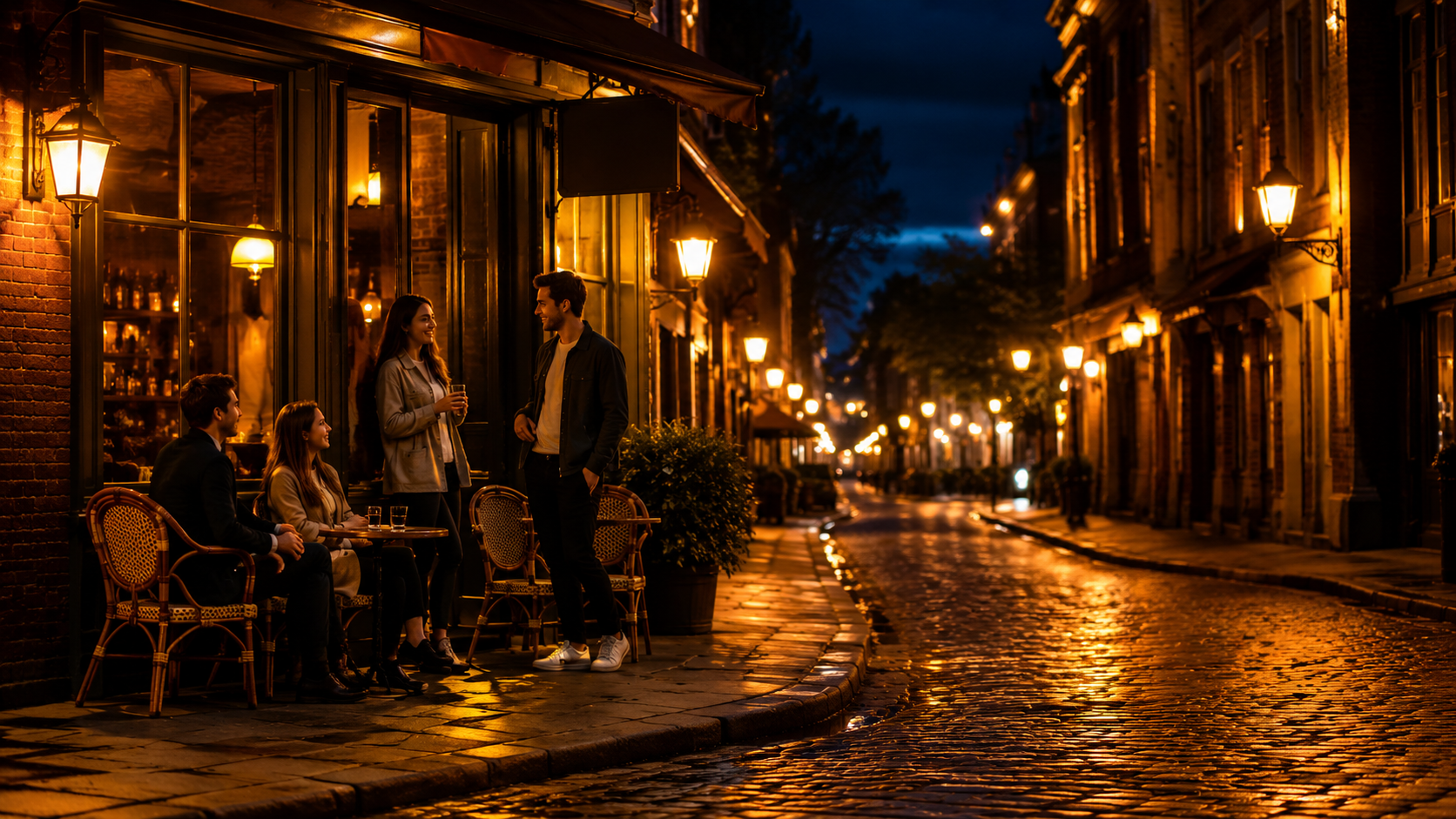
This is the same reason it works well as lounge music for bars, rooftops and restaurants: venues that need people talking, ordering and staying relaxed for hours have already solved this problem, and a dinner party has the same requirements at a smaller scale. If your table naturally drifts toward golden hour, laid back energy, the sunset chillout sound works particularly well for an evening meal, especially one that starts before dark and carries into the night.
Setting the Volume So It Actually Disappears
The single most common mistake is volume, not song choice. Background music for a dinner party should sit low enough that two people at opposite ends of a six person table can talk normally without leaning in. A rough test: stand in the kitchen while plating food and see if you can still follow a conversation happening at the table. If you can't, it's too loud.
Speaker placement matters almost as much as the volume knob. One speaker blasting from a corner creates a hot zone near it and a dead zone far from it. If you have two speakers, spread them across the room rather than stacking them together. If you only have one, point it away from the table rather than directly at it, so the sound reaches the room as ambience rather than as a beam aimed at your guests' ears.
Pacing the Evening Instead of Just Picking Songs
A dinner party has a shape: people arriving and getting a first drink, sitting down to eat, the natural lull around dessert, and then either a slow wind down or a shift into a livelier after dinner phase if people are staying. Music can track that shape instead of staying flat the whole night.
Arrival works well with something a touch warmer and more upbeat, since people are still standing, holding a drink, making small talk. Once everyone sits down for the meal itself, that's when you want the most neutral, steady chill house, the kind that can run for an hour without a single moment that makes someone say "ooh, what's this song." During dessert and coffee, you can let it soften further into more ambient, unhurried territory, the same quieter end of chill house that works well when a long day is winding down. If people linger afterward with a second bottle of wine, that's the one moment you might deliberately let the energy tick back up slightly, but even then, resist the urge to jump genres. Consistency of sound is part of what makes it feel considered rather than accidental.
The Real Problem With Playlists: They Run Out
Even a well built dinner party playlist has a shelf life. Once it loops back to the start, sharp ears notice, and the "oh, we're back at the beginning" moment is a small but real dent in the mood you built, especially on a night that runs long once dessert, coffee and conversation stretch past the point you planned for.
This is a solved problem in venues that need music running for far longer stretches than any home host does. A hotel lobby music setup or a cafe that plays chill house all day doesn't rely on a finite playlist at all. They use a continuous stream that never loops back to the same fifteen songs, because someone sitting in a cafe for three hours will absolutely notice a repeat. A dinner party is a smaller version of the same need: something that keeps generating fresh, tonally consistent tracks for as long as your guests are at the table, without you checking your phone between courses to queue up the next thing.
If You Want to Understand the Sound Before You Commit
If chill house is new to you and you want the short version of where it came from and why it sounds the way it does, what chill house actually is and where it came from is a useful five minute read before your next dinner. And if this kind of low key, conversation first music has worked for you at home, it's worth knowing it's the same sound powering a lot of the physical spaces you already enjoy being in: the bars, cafes and lounges that build their whole atmosphere around it.
Let It Run All Night
For an actual dinner, the simplest fix to the playlist problem is to stop using a playlist. Chillhouse Live is a 24/7 deep house and chill house stream, so you can put it on when the first guest arrives and leave it running through dessert and coffee without ever touching your phone again. There's no loop, no awkward silence when a playlist ends, and no algorithm suddenly deciding to surprise you with something upbeat mid course.
Play the live radio stream directly through any speaker for pure audio, or put the YouTube channel on a TV or laptop in the corner of the room if you want the slow moving visuals running quietly in the background too. Either way, the music takes care of itself, which means you get to focus on the parts of the evening that actually need you: the food, the wine and the people at your table.